
A Comprehensive Guide to Rack Screws and Mounting Hardware
Posted by admin on Oct 27th 2026
You can spend a fortune on new tech gear, but none of it can actually be installed without handfuls of small steel fasteners. It’s easy to ignore the little pieces of metal when planning a big project, yet grabbing the wrong bag of rack screws can ruin expensive frames, stall your schedule, and waste valuable hours. Getting the right hardware in place from day one makes everything go together easily.
Picking the Right Fit for the Job
At first glance, a rack screw looks pretty much like any other bolt you find in a toolbox. However, server racks require an exact match. If someone tries to force the wrong thread into a metal hole, it will strip the threads and ruin the opening for good.
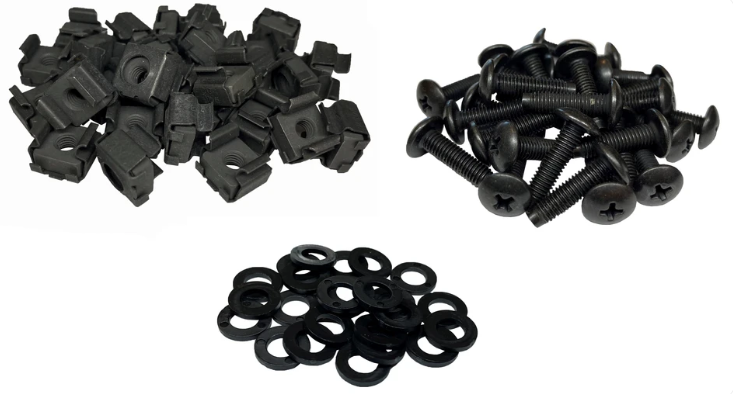
Finding the right rack screw size depends on the kind of cabinet rails you have. Some older frames have threaded holes already drilled into the metal posts, while most modern server cabinets use open cutouts that take cage nuts. In typical work rooms, you run into three main sizes:
Ten-thirty two screws have fine, tightly spaced threads. You usually spot these in older broadcast gear rooms and smaller wall mounted boxes.
Twelve-twenty four screws are a little bit thicker with wider thread gaps. Since the grooves are spaced further apart, they catch quickly, handle rougher treatment, and are less likely to cross thread when being installed quickly.
M6 screws are what you will find in most modern computer facilities today. Paired with matching cage nuts, M6 rack mount screws hold the majority of heavy servers and equipment sliding into cabinets today. Mixing these different sizes together on the floor can create confusion and ruin expensive equipment, so keeping each bag clearly marked saves your crew from stripped hardware.
Smart Details That Keep Gear Looking Brand New
A well made rack screw has small design choices that make a huge difference during assembly. One great example is a pilot tip, which is a smooth, unthreaded end at the very tip of the bolt. When a worker has to hold a heavy computer with one arm while starting a screw with the other, that smooth point slips easily into the hole first. It acts like a guide, lining the screw up straight so the threads catch evenly every time.
Protective plastic washers make a big difference as well. Quality screws often come with nylon or plastic rings right under the bolt head. That washer keeps metal from grinding against metal as you tighten it, protecting the painted finish and keeping the metal mounting brackets from warping under pressure.
The Chaos of Missing Parts on Moving Day
A big equipment upgrade involves pallets of gear arriving from dozens of different companies. Cabinets roll in, the air conditioning is running, and brand new computers are unboxed and ready to mount. Yet if nobody remembered to order the fastening hardware, everything stops.
Small items get forgotten all the time simply because people are paying attention to the big, expensive equipment. Having a dependable supplier changes this. Instead of making your team dig through a dozen messy shipping boxes, a great supplier bundles the exact screws, clips, and accessories into labeled bins. Everything is organized and waiting right in front of the cabinet, making it easy to get to work.
Setting Up for Success with Rackfinity
When you are putting together a whole room of new equipment, peace of mind comes from knowing nothing got left behind. Rather than treating small screws as an afterthought, Rackfinity works directly with major manufacturers and makes RackGold® parts to make sure your workers have every single piece ready before the doors even open. We take care of everything behind the scenes, navigating stock shortages, finding hard to get parts, and packing kits so your build finishes right on time.
See how a solid sourcing partner takes the headache out of your next hardware project. Reach out to the Rackfinity team to coordinate your upcoming project needs.